
What is proactive coping and how can we change our mindset?

It’s a known fact that many of us treat our mental health like a car engine. We only pop the hood when something goes wrong or when smoke is pouring out from under it. By then, we’re in the “red zone” or “danger zone”. We’re overwhelmed, exhausted, and desperate for an easy fix.
The average gap between someone needing mental health support and actually receiving it is 11 years. That’s 11 years of waiting, and for young people, those 11 years represent formative chapters of life spent in survival mode rather than growth mode.
But have you ever asked yourself why we wait? And more importantly, how can we be more proactive and possibly prevent the smoke?

Why are humans naturally reactive?
The delay in seeking mental health support isn’t a character flaw; it’s part of how we cope as humans. Our brains are wired to protect us. Not only from immediate danger, but also from becoming overwhelmed by dwelling on what might go wrong. Just as we often soften or forget painful memories to keep moving forward, we tend to downplay or ignore potential future stress as a way of protecting ourselves. Understanding this natural tendency is the first step in recognising why we often wait and how we can choose to be more proactive.
Barriers to being proactive are not only neurological, they can also be practical and social as well. Traditional support can sometimes feel formal or intimidating. For young people, especially, stigma and limited emotional vocabulary can create barriers. If you don’t yet have the language to explain what you’re feeling, reaching out can feel overwhelming.
What is proactive coping?
Proactive coping is the process of preparing for potential stressors so you either prevent them entirely or lessen their impact. It’s the equivalent of checking the weather before you leave the house and packing an umbrella rather than getting soaked because you weren’t prepared. When it comes to mental health, proactive coping can be described in four steps. Firstly, you build up your “reserves” while you are feeling good. This could include working on your physical health, social connections like your ‘Crew’ and emotional resilience. Secondly, you work on developing the self-awareness to see a potential stressor. For example, this may be mentally flagging a difficult family meeting on the horizon or for a young person, they may have an exam coming up that would usually stress them out. From this point, you assess the threat. Is it something that you can handle? Lastly, you take immediate action. This might mean alerting your support system that you may need to vent, or starting a study schedule early.
Putting it into practice
While proactive coping may sound simple in theory, the thought of putting it into practice can seem daunting, especially for young people.
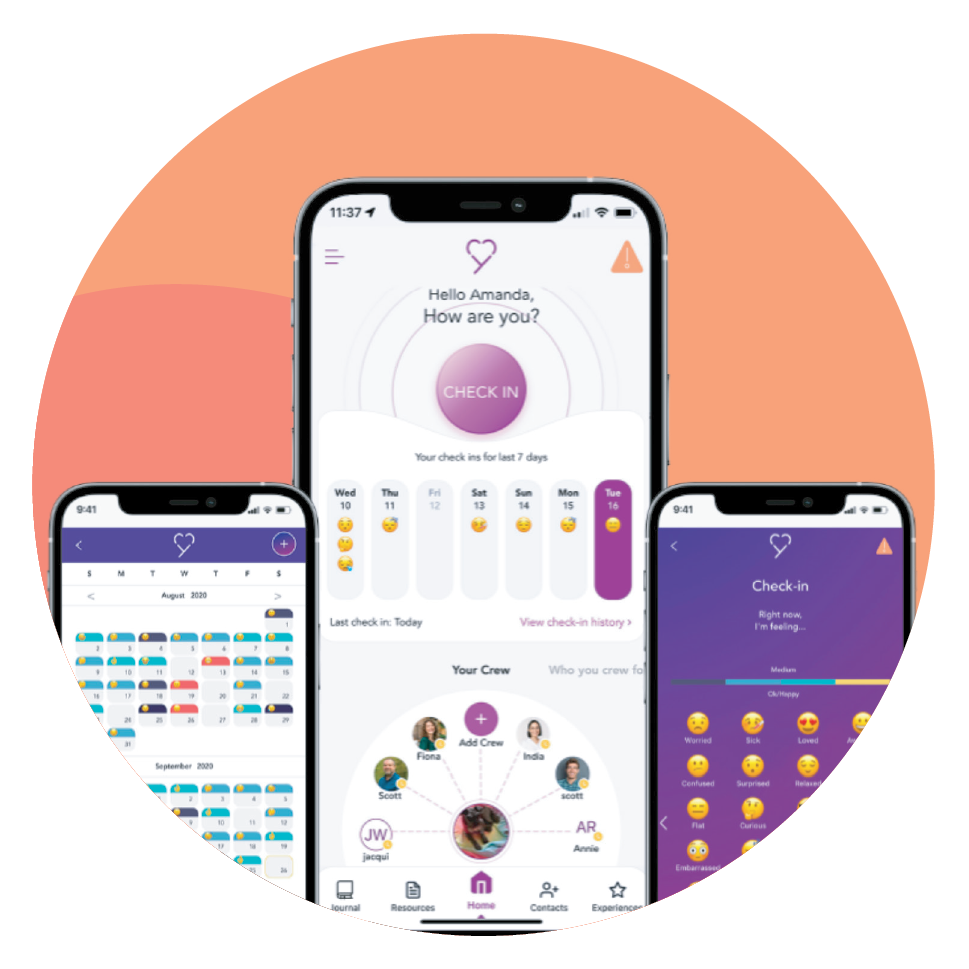
This is where YourCrew shines. It’s a simple (and free) App that is designed to help turn “coping” from a chore into a daily rhythm. Built by young people for young people, YourCrew gives you the tools to help flip a reactive mindset to a proactive one. Here are our top five tools:
1. Mood tracker
The first step to managing an emotion is identifying it. YourCrew’s daily Mood Tracker is designed to help you move a feeling from a “scary unknown” into a manageable data point. By tracking your mood daily, your support network known as your “Crew” gets oversight of how you’re tracking. They can see the dip before you even have to say, “I’m struggling.”
2. Support network
Struggle thrives in isolation. YourCrew houses your support network (Crew) ensuring you have people who you trust to reach out to at the tap of a button. It helps to reduce the feeling of loneliness and ensures you have your safety net ready in place for when you need them so you aren’t reaching out to a stranger in crisis.
3. A-Z and How-To Guides
Sometimes the biggest hurdle is simply not knowing what to say. Whether you’re the one struggling or the one wanting to help, YourCrew’s A-Z Guide and How-To Guides help break down barriers by providing guidance on what you could say or do in certain situations.
4. Digital journal
Your head is a noisy place to solve a problem. YourCrew’s digital journal allows you to get thoughts out of your mind and onto a screen whenever you need. This simple act reduces brain fog and provides the perspective needed to see a solution you might have missed. If you aren’t sure of where to start or how best to do it, we’ve designed journal prompts to help.
5. The Safety Plan
A Safety Plan isn’t something you should try to write while you’re panicking. It’s your emergency blueprint so you and your Crew know what to do should a crisis arise. YourCrew guides you step-by-step to help you build a plan while you’re calm, so if things ever get too much, you already know exactly what to do and who to call.
In addition to these tools, YourCrew can connect you and your Crew with emergency services and third-party support at the click of a button.
We’ve built these tools because we believe mental health shouldn’t be a rescue mission, it should be a daily mission. While you can’t control every circumstance that may arise, you can control how you prepare for them. Proactive coping isn’t just about preventing a crisis; it’s about clearing the space for you to actually enjoy your life.
Build your foundation with YourCrew today, so that when life gets loud, you already have the tools to stay grounded. Most importantly, share this with all the young people in your life and help us bridge the 11 year gap.
Did you find this blog useful?
Consider a donation to the Harrison Riedel Foundation today to help more young people access the right support at the right time.